
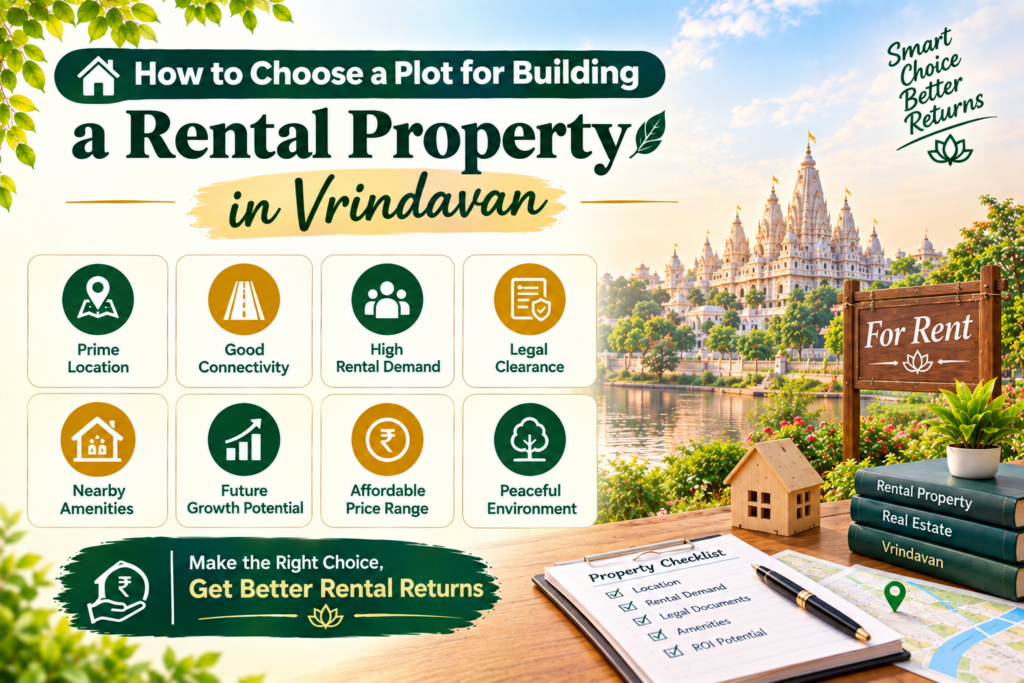
Buying land with the intention of building a rental property requires a different approach than buying a plot only for personal use. When looking for a plot for rental property in Vrindavan, buyers should consider location, plot size, road access, surrounding development, construction possibilities, and the type of tenants they want to attract.
Vrindavan has a diverse property market, with people visiting for religious, residential, and longer-stay purposes. This can create different opportunities for owners who plan to construct a property for rental use.
However, the rental potential of a future property depends heavily on the plot selected. Here are the key factors to consider before purchasing.
1. Decide What Type of Rental Property You Want to Build
Start by deciding what you want to construct on the plot.
Possible options may include:
- Independent rental units
- A residential house with rental portions
- Multiple residential units, subject to applicable regulations
- A property designed for longer-term tenants
- A home suitable for families or extended stays
The intended use will influence the plot size, layout, parking requirements, construction planning, and budget.
Having a basic construction plan in mind before buying land can help you avoid selecting a plot that does not suit your future requirements.
2. Choose the Location Based on Rental Demand
Location is one of the most important considerations when selecting a plot for rental property in Vrindavan.
A future rental property should ideally be convenient for its intended occupants. Depending on your target tenants, consider access to:
- Main roads
- Local markets
- Daily-use shops
- Transportation
- Healthcare facilities
- Important visitor destinations
- Residential neighborhoods
- Other essential amenities
Do not select a location only because it is currently popular. Also examine the existing development and accessibility of the surrounding area.
3. Consider the Road Width and Access
Road access can affect both construction and future rental convenience.
Before purchasing a plot, check:
- Width of the approach road
- Condition of the road
- Access for construction vehicles
- Entry and exit arrangements
- Parking possibilities
- Connectivity with nearby roads
A plot may appear attractive because of its size or price, but difficult access can create challenges during construction and later when tenants occupy the property.
4. Select a Practical Plot Size
The ideal plot size depends on the type of rental property you plan to build.
A smaller plot may work for a compact residential unit, while a larger plot may provide more flexibility for rooms, parking, open space, or multiple units, subject to applicable building regulations.
Before deciding on plot size, consider:
- Planned built-up area
- Number of rooms
- Parking
- Staircase requirements
- Open space
- Utility areas
- Future expansion possibilities
The goal should be to purchase a plot that provides enough space for your intended construction without unnecessarily increasing the land cost.
5. Check the Surrounding Development
Look at what already exists around the plot and what is developing nearby.
A developing residential area may offer different rental opportunities compared with an isolated location.
Check for:
- Existing residential properties
- New construction
- Roads and infrastructure
- Shops
- Local services
- Transportation
- Electricity and water availability
- General accessibility
The surrounding environment can influence how convenient the eventual rental property will be for tenants.
6. Think About Your Target Tenants
Your target tenant should influence your plot selection.
For example, if you plan to build a property for families, you may need to prioritize:
- Convenient access
- Parking
- Adequate room sizes
- Nearby daily-use facilities
- A practical residential environment
If the property is intended for people staying for longer periods, kitchen space, storage, accessibility, and neighborhood convenience may become more important.
Understanding your target audience before purchasing land can help you plan the property more effectively.
7. Check Construction Feasibility Before Buying
A plot should not be evaluated only by its dimensions.
You should also understand whether the proposed construction is feasible under applicable local rules and approvals.
Before purchasing, consider factors such as:
- Applicable building regulations
- Permitted construction
- Setback requirements
- Access road requirements
- Plot dimensions
- Local development restrictions
- Utility connections
A qualified architect or relevant professional can help assess whether your proposed building plan is practical for the plot.
8. Plan for Parking
Parking can be an important consideration for a rental property.
If you are planning a house or multiple residential units, determine where vehicles will be accommodated before purchasing the plot.
Consider:
- Number of expected occupants
- Vehicle access
- Parking layout
- Gate width
- Available open space
- Local requirements
Planning parking at the beginning is easier than trying to create parking space after construction has started.
9. Compare Land Cost With Construction Budget
Buying a plot is only the first part of the project.
If the objective is to build a rental property, you should estimate the complete project budget.
This may include:
- Plot purchase cost
- Registration and applicable charges
- Construction cost
- Architect or professional fees
- Utility connections
- Flooring and fixtures
- Electrical and plumbing work
- Parking development
- Furnishing
- Maintenance setup
A plot that looks affordable may not necessarily be suitable if the total land-plus-construction budget becomes difficult to manage.
10. Verify the Plot Documents
Legal verification is essential before purchasing land.
Depending on the property and transaction, buyers may need to verify relevant documents related to:
- Ownership
- Previous transactions
- Sale deed
- Property records
- Applicable approvals
- Encumbrances
- Tax or payment records
- Layout or development permissions
The exact documentation can vary from one property to another.
It is advisable to have the documents reviewed by a qualified property lawyer or relevant professional before completing the transaction.
When building a rental property, maintenance should be considered from the planning stage.
Choose a plot and design that make routine maintenance practical.
Think about:
- Water drainage
- Plumbing access
- Electrical maintenance
- Common areas
- Waste management
- Exterior maintenance
- Accessibility for repairs
A practical design can make property management easier after tenants move in.
12. Compare Multiple Plots Before Purchasing
Do not select the first plot that meets your basic requirements.
Prepare a comparison of at least several options based on:
| Factor | Plot A | Plot B | Plot C |
|---|---|---|---|
| Plot Size | |||
| Purchase Price | |||
| Road Width | |||
| Location | |||
| Accessibility | |||
| Surrounding Development | |||
| Parking Potential | |||
| Construction Feasibility | |||
| Documentation | |||
| Future Use |
This can help you identify which plot actually fits your planned rental project.
Common Mistakes to Avoid
When purchasing land for rental construction, avoid making decisions based only on price.
Some common mistakes include:
Buying Without a Construction Plan
A plot may look suitable until you try to fit the planned rooms, parking, staircase, and open spaces into it.
Ignoring Road Access
Poor access can create construction and tenant-related difficulties.
Assuming Rental Demand
A property should not be purchased solely on the assumption that tenants will always be available.
Skipping Document Verification
Proper legal verification should be completed before making a purchase commitment.
Spending the Entire Budget on Land
Keep sufficient funds available for construction, approvals, furnishing, and other project expenses.
Is Buying a Plot for Rental Property in Vrindavan a Good Idea?
A plot for rental property in Vrindavan can provide flexibility because the owner can plan the construction according to the intended rental audience and available budget.
However, the outcome depends on factors such as location, construction quality, tenant demand, operating expenses, property management, and applicable regulations.
Therefore, buyers should evaluate the complete project rather than looking at the plot price alone.
Final Thoughts
Choosing land for a future rental property requires careful planning. The right plot should match your construction requirements, target tenants, budget, accessibility needs, and long-term property plans.
Before buying a plot in Vrindavan, visit the location, compare multiple options, understand the surrounding development, verify the documents, and consult appropriate professionals regarding construction feasibility.
A well-planned plot purchase can give you greater flexibility when developing a rental property in the future.