
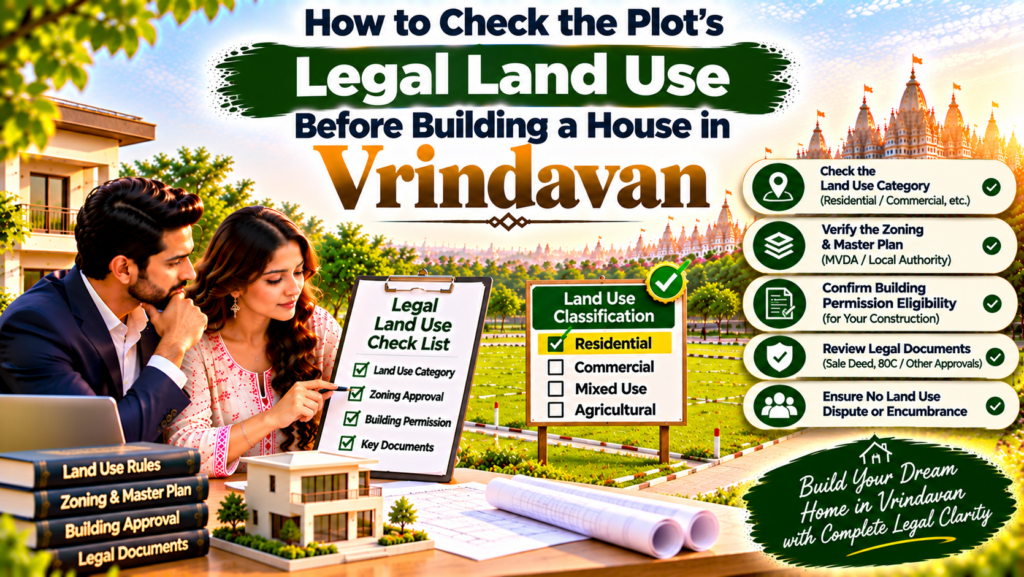
Buying a plot for residential construction requires more than checking its location, dimensions and physical condition. Buyers should also confirm whether the land is legally permitted for the intended use.
A plot may appear suitable for building a house, but its recorded land use, planning restrictions or applicable permissions may affect what can legally be constructed on it.
Proper legal land use verification for plots in Vrindavan helps buyers understand the permitted use of a property before making a purchase or starting construction.
1. Understand the Meaning of Land Use Classification
Land use classification refers to the designated purpose for which a particular piece of land may be used under applicable planning regulations.
Common categories may include:
Residential
Commercial
Industrial
Agricultural
Institutional
Mixed use
A buyer planning to build a residential house should verify whether the plot is permitted for residential use under the applicable planning framework.
Do not assume that every vacant plot is automatically approved for residential construction.
2. Check the Applicable Master Plan
A master plan provides a planning framework for the development and land use of an area.
Before purchasing a plot, identify the planning authority responsible for the location and check the applicable master plan or zoning information.
Verify:
Designated land use
Planning zone
Applicable development restrictions
Proposed road or infrastructure reservations
Any relevant planning conditions
For properties in and around Vrindavan, check the applicable records with the competent planning authority, which may include the Mathura-Vrindavan Development Authority (MVDA), depending on the exact location.
3. Verify the Plot’s Revenue and Land Records
Revenue records can provide important information about the land’s recorded classification and ownership-related details.
Depending on the property and applicable records, ask for:
Khasra number
Khatauni records
Relevant land classification
Ownership entries
Available mutation records
Other applicable revenue documents
These records should be examined together with planning and land-use permissions. A revenue entry alone may not establish that residential construction is permitted.
4. Check Whether Agricultural Land Has Been Permitted for Residential Use
Some plots may be part of land that was previously recorded as agricultural.
If the land is being marketed for residential use, verify whether the required conversion, permission or other applicable legal process has been completed.
Ask for:
Relevant land-use permission
Applicable conversion orders, where required
Supporting revenue records
Planning authority approvals
Documents establishing the permitted use
The exact requirements depend on the location, land category and applicable Uttar Pradesh regulations.
5. Verify the Approved Layout
If the plot is part of a residential colony or plotted development, ask for the approved layout plan and verify its status with the competent authority.
Check:
Approval details
Plot number
Plot dimensions
Designated residential areas
Internal roads
Common facilities
Reserved or restricted areas
Make sure the actual plot being offered matches the relevant approved layout.
An advertised layout or brochure should not be treated as proof of official approval.
6. Check Applicable Construction Restrictions
Even when a plot has residential land use, certain construction conditions may apply.
Depending on the location and applicable regulations, these may relate to:
Permitted building height
Setback requirements
Ground coverage
Floor area ratio (FAR), where applicable
Road width requirements
Building plan approval
Other local development conditions
Consult the relevant authority or a qualified architect to understand the construction rules applicable to the specific plot.
7. Verify Whether Any Restrictions Apply to the Land
Certain plots may be affected by restrictions that influence their permitted use or development.
Before buying, investigate whether the land is affected by:
Proposed road widening
Public infrastructure reservations
Planning restrictions
Environmental or other statutory restrictions
Applicable heritage or protected-area controls
Legal disputes or third-party claims
Not every restriction applies to every location. Verification should be based on the exact plot and its records.
8. Match the Physical Plot With Official Records
After reviewing the documents, compare them with the actual property being offered.
Verify:
Khasra or plot identification
Location
Plot boundaries
Dimensions
Approved layout position
Road access
Relevant land-use details
If there is a mismatch between the physical property and official records, seek clarification before proceeding.
A qualified surveyor or property professional may help with physical identification and measurement.
9. Consult the Relevant Authority and Property Lawyer
Land-use verification may involve multiple records and authorities.
For a more reliable assessment:
Contact the competent planning authority
Obtain relevant planning or zoning information
Verify applicable land conversion permissions
Review revenue records
Consult a qualified property lawyer
Confirm the requirements before construction
Independent verification is particularly important when buying agricultural land, converted land or plots in newly developed areas.
10. Complete Land Use Verification Before Purchasing
Do not leave land-use verification until after the purchase.
Before making a final decision, confirm:
The recorded classification of the land
Whether residential use is permitted
Whether required permissions are available
Whether the layout has applicable approval
Whether construction restrictions apply
Whether the documents match the actual plot
Keep copies of relevant documents and obtain professional advice if any condition is unclear.
Legal Land Use Verification Checklist
| Verification Area | What Buyers Should Check |
|---|---|
| Land Classification | Residential, agricultural or other recorded use |
| Master Plan | Applicable planning zone |
| Revenue Records | Khasra, Khatauni and relevant entries |
| Land Conversion | Applicable permission or conversion records |
| Layout Approval | Approved layout and plot identification |
| Construction Rules | Setbacks, height and other conditions |
| Restrictions | Applicable planning or statutory restrictions |
| Plot Identification | Physical location and document match |
| Authority Verification | Confirmation from competent authority |
| Legal Review | Independent property document review |
Common Mistakes Buyers Should Avoid
Assuming Every Vacant Plot Is Residential Land
Vacant land does not automatically qualify for residential construction. Verify its recorded classification and permitted use.
Relying Only on the Developer’s Brochure
Marketing material may describe a project as residential, but buyers should independently check the applicable official approvals.
Ignoring Revenue Records
Revenue records and planning permissions serve different purposes. Both may need to be examined during verification.
Confusing Land Ownership With Construction Permission
Ownership documents alone do not necessarily establish permission to construct a residential building.
Delaying Verification Until After Purchase
Unresolved land-use issues can create complications later. Complete the relevant checks before making a final purchase commitment.
Conclusion
Legal land-use verification is an important step before purchasing a plot for residential construction in Vrindavan. Buyers should review the applicable master plan, revenue records, land-use permissions and approved layout documents.
The physical appearance of a plot or its description in an advertisement cannot independently establish whether residential construction is legally permitted.
Before finalising a purchase, verify the records with the competent authority and consider independent legal advice. A careful verification process can help buyers make a more informed decision when selecting land for their future home.