
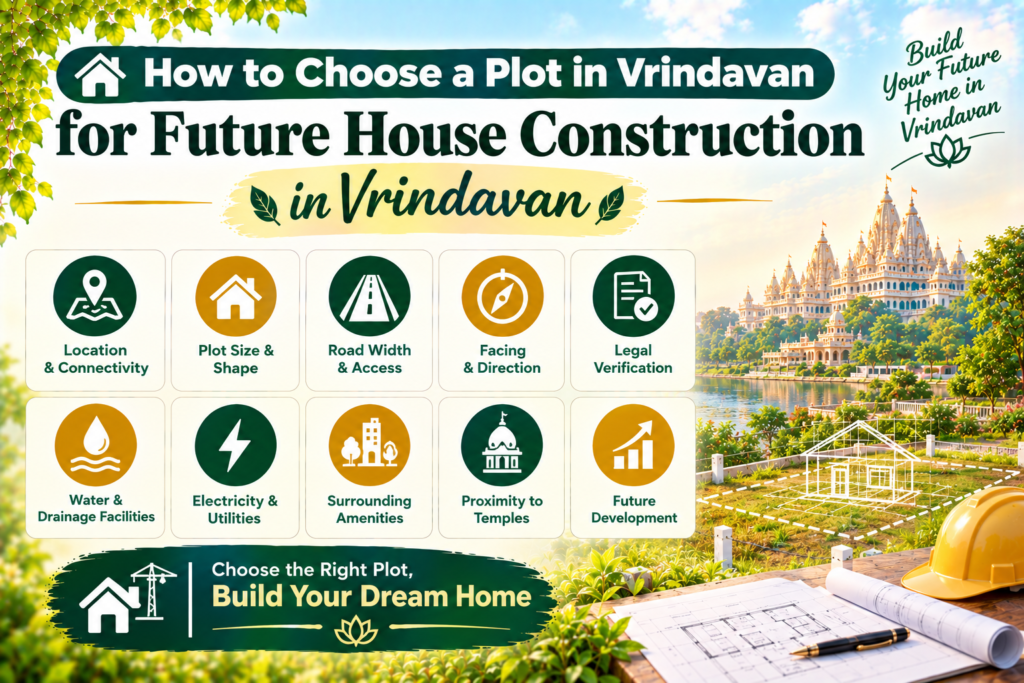
Buying a plot with the intention of building a house later requires a different approach from purchasing land only for short-term purposes. The plot should not only fit your current budget but also support your future house plans, parking requirements, open space and construction needs.
If you are planning to buy a plot for future house construction in Vrindavan, it is important to evaluate the plot from a long-term residential perspective.
This guide explains the key factors buyers should consider before selecting a plot for future construction.
1. Start With Your Future House Requirements
Before selecting a plot, think about the type of house you may want to build.
Consider questions such as:
- How many bedrooms will you need?
- Will you need a separate guest room?
- Do you want a dedicated parking area?
- Will you need a garden or open space?
- Do you plan to have multiple floors?
- Will your family requirements increase in the future?
- Do you want space for future expansion?
Having a basic idea of your future house can help you determine what type of residential plot in Vrindavan will be suitable.
2. Choose the Plot Size According to Your Plan
Plot size should be considered in relation to the house you intend to construct.
A smaller plot may work for a compact house, while a larger plot can provide additional space for:
- Parking
- Garden
- Open areas
- Larger rooms
- Future expansion
- Utility areas
Do not select a plot size only because it is affordable today. Consider whether it will provide enough usable space for your future requirements.
3. Pay Attention to Plot Dimensions
Two plots with the same total area can have different dimensions.
For example, a rectangular plot with practical frontage may provide different construction possibilities compared with a narrow plot having the same area.
Check:
- Plot width
- Plot length
- Frontage
- Shape
- Access from the road
- Usable construction area
Discuss the dimensions with an architect or building professional before making a final decision if you already have a specific house plan in mind.
4. Check Road Access
Road access is an important factor for future construction.
Construction materials, workers and equipment will need to reach the property. A convenient road can make construction logistics easier.
Check:
- Road width
- Approach road condition
- Entry and exit
- Vehicle accessibility
- Connection with nearby main roads
- Whether the road is publicly accessible or subject to specific restrictions
Road access should be evaluated during an actual site visit rather than relying only on a property listing.
5. Consider the Plot Facing
The direction in which the plot faces can affect how you plan the entrance, rooms, parking and other areas.
Rather than selecting a plot only based on a general preference for a particular facing, consider how the plot orientation works with your intended house design.
An architect can help you understand how the available space can be planned efficiently.
6. Think About Parking Before Buying
Parking is often easier to plan before construction than after the house has already been designed.
Determine whether the plot can accommodate:
- One or more cars
- Two-wheelers
- Visitor parking, where required
- Convenient vehicle entry and exit
If parking is important to your family, include it in your plot selection criteria from the beginning.
7. Check Utility Availability
Before purchasing a plot in Vrindavan, check the availability and connection process for essential utilities.
Important areas include:
- Electricity
- Water supply
- Drainage
- Sewerage where applicable
- Internet connectivity
- Other local utility services
Find out whether connections are already available near the plot or whether additional arrangements may be required during construction.
8. Understand Local Building Requirements
Before finalizing a plot, buyers should understand the applicable local requirements for construction.
Depending on the location and property type, there may be requirements related to:
- Building permissions
- Setbacks
- Ground coverage
- Building height
- Road width
- Floor limits
- Land-use conditions
These requirements can affect the amount and type of construction possible on a plot.
It is advisable to verify the applicable rules with the relevant local authority or a qualified professional before making a purchase decision.
9. Check the Surrounding Development
The area surrounding your plot can affect your future living experience.
During a site visit, observe:
- Nearby houses
- Roads
- Open land
- Commercial activity
- Construction activity
- Essential services
- Drainage
- Overall accessibility
Also consider whether the surrounding area is developing in a way that is compatible with your future residential plans.
10. Think About Future Expansion
Your first house plan may not remain the same forever.
You may eventually need:
- An additional bedroom
- A larger living area
- A study
- A guest room
- Additional parking
- A terrace area
- More storage
If future expansion is important to you, select a plot that provides sufficient flexibility for your intended construction and complies with applicable building regulations.
11. Check the Plot Boundaries Carefully
Before buying land, make sure the physical boundaries correspond with the documents and property details.
Check:
- Length and width
- Corner points
- Road-facing side
- Adjacent properties
- Boundary markings
- Survey or measurement details
If there is any uncertainty regarding the physical boundaries, obtain professional assistance before proceeding.
12. Verify Ownership and Documents
A suitable plot still needs proper documentation.
Before purchasing, verify relevant documents such as:
- Ownership records
- Sale documents
- Property identification
- Land-use details
- Applicable approvals
- Registration information
- Tax or other dues
- Encumbrance-related information where applicable
The exact documents required can vary depending on the property and transaction. Professional legal verification can help identify potential issues before purchase.
13. Plan Your Construction Budget Separately
Buying the plot is only one part of the overall cost of building a house.
Your future budget may include:
- Construction materials
- Labour
- Architectural fees
- Approval-related expenses
- Electrical work
- Plumbing
- Flooring
- Doors and windows
- Kitchen
- Bathroom fittings
- Boundary wall
- Landscaping
- Interior work
You do not necessarily need to finalize the complete construction budget before purchasing the plot, but having a broad estimate can help you choose land that fits your long-term financial plan.
14. Consider How Long You Will Hold the Plot
If you are buying the plot now but planning construction several years later, consider how the property will be maintained during the holding period.
Think about:
- Boundary protection
- Site security
- Vegetation and cleanliness
- Local development
- Property-related dues
- Periodic site visits
A plot that remains vacant for several years may require basic monitoring and maintenance.
15. Visit the Plot Before Making a Decision
Online photographs and descriptions cannot provide the complete picture.
During your site visit, check:
- Actual plot dimensions
- Road access
- Surrounding properties
- Utility availability
- Drainage
- Ground conditions
- Nearby development
- Noise and traffic
- Accessibility
If possible, visit more than once before making a final decision.
16. Compare Multiple Plots
Do not finalize the first plot you see.
Compare different options based on:
| Factor | Plot A | Plot B |
|---|---|---|
| Plot size | Check | Check |
| Dimensions | Check | Check |
| Road width | Check | Check |
| Access | Check | Check |
| Utilities | Check | Check |
| Surrounding development | Check | Check |
| Construction suitability | Check | Check |
| Documentation | Check | Check |
| Total cost | Compare | Compare |
A structured comparison can help you identify which plot better matches your future house requirements.
17. Think About Your Future Lifestyle
A house is more than the structure built on the land. The surrounding location will become part of your daily lifestyle.
Think about:
- Access to markets
- Healthcare facilities
- Religious and social areas
- Transportation
- Nearby services
- Family requirements
- Overall neighborhood environment
Choose a plot that fits the lifestyle you expect to have when you eventually build your house.
18. Take Professional Advice When Necessary
If you already have a specific house design in mind, consider discussing the plot with an architect before purchasing it.
An architect can help assess whether the plot dimensions, orientation, access and applicable requirements are compatible with your intended house plan.
Similarly, a qualified property lawyer can help with document verification.
Conclusion
Choosing a plot for future house construction in Vrindavan requires planning beyond the initial purchase price. Plot size, dimensions, road access, utilities, surrounding development, parking, construction requirements and documentation can all affect how successfully you can use the land later.
The best approach is to start with your future house requirements and then evaluate each available plot against those requirements. A site visit, document verification and professional advice can further reduce the chances of overlooking important details.
If you are planning to buy a plot in Vrindavan for future residential construction, take the time to compare different options and choose land that provides enough flexibility for your long-term plans.