
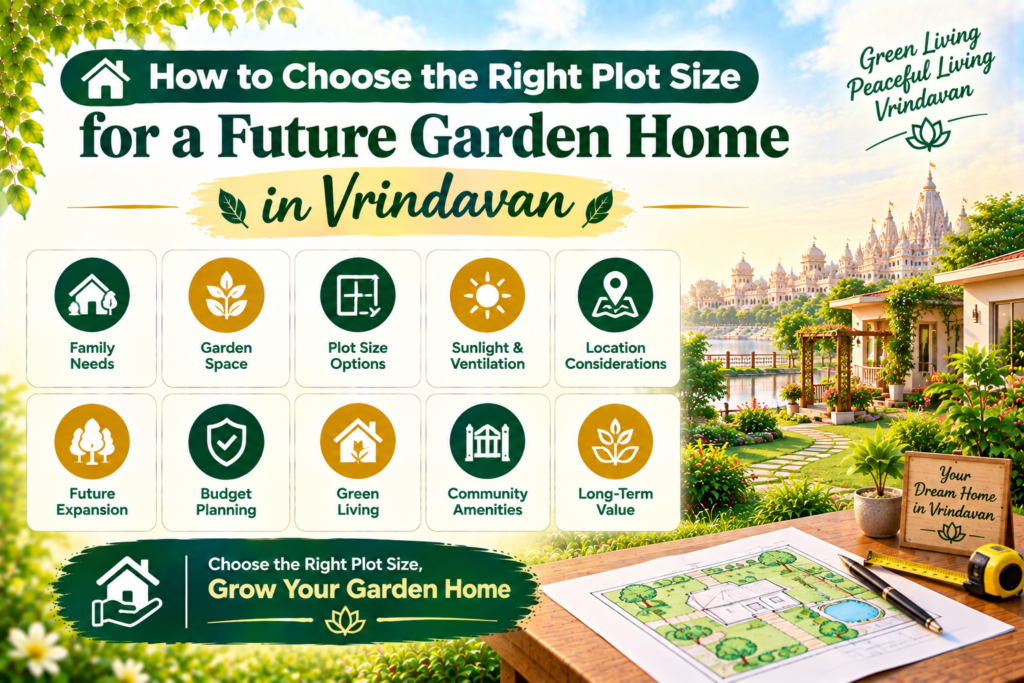
A garden home can offer a combination of comfortable living and open outdoor space. For buyers planning to build a garden home in Vrindavan, choosing the right plot size is one of the most important decisions to make before purchasing land.
A plot that is too small may leave limited space for a garden, parking, and outdoor areas. On the other hand, purchasing a much larger plot than required can increase the purchase price and future maintenance responsibilities.
Therefore, the right plot size depends on your house plan, family requirements, parking needs, garden expectations, budget, and future plans.
If you are looking for the right plot size for a garden home in Vrindavan, consider the following factors.
1. Decide How Much House Space You Need
Start with the house rather than the garden.
Think about the approximate built-up area you may need for:
- Bedrooms
- Living room
- Kitchen
- Bathrooms
- Guest room
- Utility areas
- Storage
- Staircase
- Additional rooms
For example, a family planning a compact home will have different land requirements from someone planning a large multi-bedroom house.
Having a basic house requirement in mind will make it easier to estimate the remaining space available for outdoor areas.
2. Decide How Much Garden Space You Want
The meaning of a garden home can vary from buyer to buyer.
Some people may want:
- A small front garden
- A lawn
- Trees and plants
- A backyard garden
- Flower beds
- A sitting area
- A larger landscaped outdoor space
Decide what type of garden you actually want before selecting the plot.
A small landscaped area requires considerably less space than a large lawn with trees, pathways and outdoor seating.
3. Consider Parking Requirements
Parking should be included in your plot planning from the beginning.
Depending on your family requirements, you may need space for:
- One car
- Two cars
- Two-wheelers
- Visitors’ vehicles
Consider not only the parking area but also the space required for comfortable vehicle movement and entry.
A plot may have sufficient total area but still be difficult to plan if the dimensions are unsuitable for parking.
4. Look at the Plot Dimensions, Not Just Total Area
Two plots with the same area can have very different layouts.
For example, one plot may be wider and another may be longer. Their suitability for a garden home can therefore differ.
Check:
- Plot width
- Plot length
- Road-facing side
- Entrance position
- Shape
- Setback requirements
- Potential building footprint
A properly proportioned plot can provide greater flexibility for combining a house with outdoor space.
5. Plan the House and Garden Together
Instead of treating the house and garden as separate requirements, think about the entire site layout.
A basic plan may include:
Road → Entrance → Parking → House → Garden/Open Space
The exact arrangement will depend on the plot dimensions and applicable building requirements.
Planning these elements together helps you understand whether the plot can support your intended lifestyle.
6. Consider Your Family Size
Your family size directly influences the amount of indoor space you need.
A small family may be comfortable with:
- Fewer bedrooms
- Compact living areas
- Smaller parking space
- Moderate garden space
A larger family may need:
- More bedrooms
- Larger common areas
- Additional bathrooms
- More parking
- Greater outdoor space
Your plot size should therefore be based on your actual requirements rather than simply choosing a standard plot size.
7. Think About Future Expansion
Your house requirements may change over time.
You may eventually want:
- An additional bedroom
- A guest room
- Another floor
- A larger parking area
- More garden space
- An outdoor sitting area
If future expansion is important to you, consider this before buying the plot.
A little additional planning at the land-purchase stage can provide more flexibility later.
8. Consider the Garden’s Maintenance
A larger garden may look attractive, but it also requires more maintenance.
Think about:
- Watering
- Gardening
- Tree maintenance
- Lawn care
- Cleaning
- Pest control
- Seasonal maintenance
If you plan to visit the property only occasionally, a very large garden may require additional maintenance arrangements.
Choose an outdoor area that matches the amount of maintenance you are comfortable managing.
9. Think About Privacy
A garden home is often planned to provide a more open and comfortable living environment.
When choosing the plot, consider:
- Neighboring properties
- Road-facing position
- Surrounding construction
- Boundary wall requirements
- Future buildings around the plot
The plot layout should allow you to create outdoor space without compromising the privacy of the home.
10. Check Road Width and Access
A garden home may involve landscaping materials, construction materials, gardening equipment and other deliveries.
Therefore, check the accessibility of the plot.
Consider:
- Approach road
- Internal road
- Road width
- Vehicle access
- Construction vehicle access
- Parking entry
Good access can make both construction and long-term maintenance more convenient.
11. Consider the Location Within Vrindavan
The right plot size is only one part of the decision.
Also consider the location’s:
- Connectivity
- Existing development
- Nearby residential areas
- Daily-use facilities
- Healthcare access
- Markets
- Roads
- Public transport
A larger plot in a location that does not suit your requirements may not be as practical as a better-located plot with a more suitable size.
12. Check Applicable Building Requirements
Before finalizing a plot, understand the applicable rules and restrictions affecting construction.
Depending on the location and property, these may relate to:
- Setbacks
- Building coverage
- Number of floors
- Road width
- Land use
- Development permissions
These requirements can affect how much of the plot can actually be used for the house and outdoor areas.
Consult the relevant authority or a qualified architect before finalizing your house plan.
13. Create a Simple Space Calculation
A basic calculation can help you shortlist the right plot.
For example:
Total Plot Area = House Area + Parking + Garden + Other Open Spaces
You should also account for areas required by applicable building regulations.
This simple approach can prevent buyers from purchasing land without considering how the complete site will actually be used.
14. Compare Different Plot Sizes
If you are unsure about the required size, compare multiple options.
| Requirement | Smaller Plot | Medium Plot | Larger Plot |
|---|---|---|---|
| House size | Compact | Moderate | Large |
| Garden | Limited | Moderate | Larger |
| Parking | Basic | Comfortable | More flexible |
| Maintenance | Lower | Moderate | Higher |
| Future expansion | Limited | Moderate | Greater |
| Purchase cost | Lower | Moderate | Higher |
The objective is not necessarily to buy the largest plot. The objective is to select a size that matches your actual requirements and budget.
15. Consider Your Total Budget
A larger plot generally means a higher initial purchase cost, but the financial impact does not stop there.
A larger property may also involve additional expenses for:
- Boundary walls
- Landscaping
- Gardening
- Watering systems
- Security
- Cleaning
- Maintenance
- Construction
Therefore, calculate both the purchase budget and the long-term maintenance budget.
16. Visit the Plot Before Finalizing
Online listings can help you shortlist properties, but a physical visit is essential.
During the visit, check:
- Actual dimensions
- Road access
- Surrounding properties
- Existing development
- Ground conditions
- Utility availability
- Neighborhood
- Property boundaries
If possible, visit more than once before making a final decision.
17. Verify Documents Before Purchase
Before buying any plot, verify the relevant property documents.
Depending on the property and transaction, this may include:
- Ownership or title documents
- Previous transaction records
- Property identification details
- Applicable approvals
- Land-use information
- Development permissions
- Other relevant records
The exact requirements can vary by property.
It is advisable to have the documents reviewed by a qualified property lawyer before signing the final agreement.
18. Choose a Plot That Matches Your Lifestyle
Ultimately, the right plot size depends on how you want to use your garden home.
Ask yourself:
- Do I want a large garden or a compact outdoor area?
- How many bedrooms do I need?
- How many vehicles need parking?
- Will I build another floor later?
- How much maintenance can I manage?
- Will the property be used throughout the year?
- Do I want more indoor space or more outdoor space?
Your answers can help you determine the most practical plot size
Conclusion
Choosing the right plot size for a garden home in Vrindavan requires careful planning. Buyers should consider the size of the future house, garden requirements, parking, plot dimensions, family size, future expansion, maintenance and overall budget.
The largest plot is not always the most suitable option. A well-planned plot that balances indoor living space, outdoor areas, parking and future requirements can be more practical for long-term use.
Before purchasing, visit the property, verify its dimensions and documents, understand applicable construction requirements, and consider getting professional advice for the proposed house layout.
With proper planning, you can select a plot that gives you enough flexibility to create a comfortable garden home in Vrindavan.