
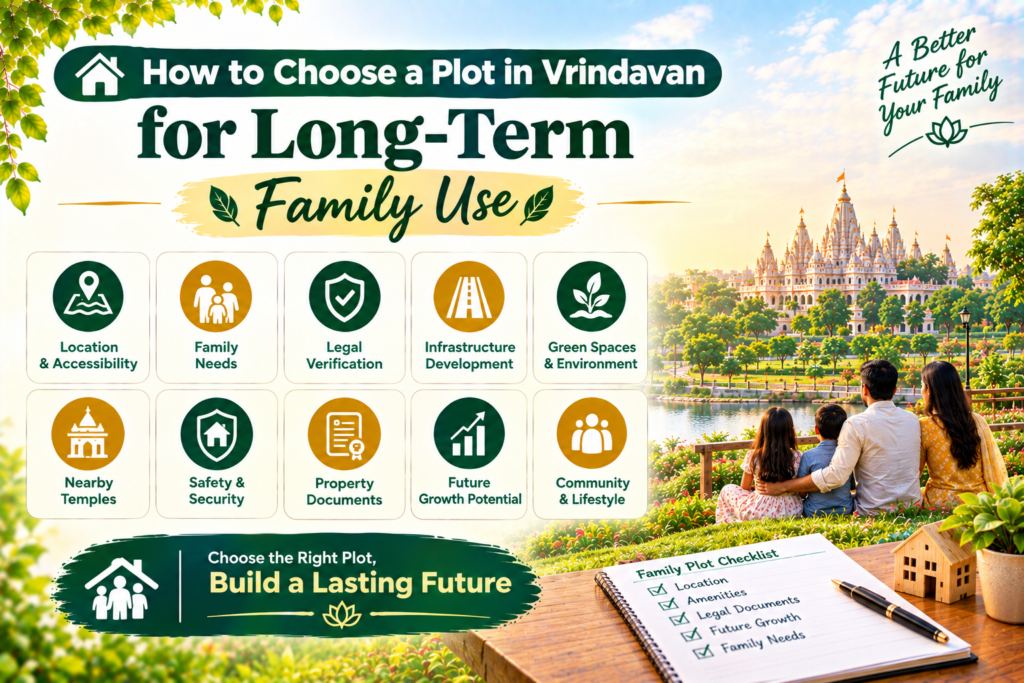
Buying a plot for family use is different from purchasing land purely as an investment. When the property is intended for a future family home, weekend residence, or long-term use, buyers need to think beyond the plot itself.
The location, accessibility, surrounding neighborhood, plot layout, available facilities, and future requirements can all influence whether the property remains practical for your family over the years.
If you are planning to buy a plot for family use in Vrindavan, here are the key factors to consider before making a decision.
1. Start With Your Family’s Long-Term Requirements
Before looking at different plots, define how your family plans to use the property.
Ask yourself:
- Will it be a permanent residence?
- Will it be used as a second home?
- Will parents or senior family members stay there?
- Will children need nearby schools and facilities?
- Do you plan to construct the house immediately or later?
- Will you need parking space?
- Could your family requirements increase in the future?
Having clear requirements makes it easier to shortlist suitable plots.
2. Choose a Location That Supports Daily Convenience
A plot may look attractive because of its surroundings, but family use requires practical connectivity.
Check the distance from:
- Main roads
- Markets
- Medical facilities
- Schools
- Banks and ATMs
- Daily-use shops
- Religious and community areas
- Public transport
You do not necessarily need every facility next to the property, but important services should be reasonably accessible.
3. Consider the Neighborhood
The neighborhood can significantly affect the experience of living on the property in the future.
During a site visit, observe:
- Existing residential development
- Nearby houses
- Road activity
- Street lighting
- Cleanliness
- General accessibility
- Construction activity
- Availability of everyday services
If possible, speak with people living nearby. Local residents can provide practical information that may not be visible in a property listing.
4. Think About the Plot Layout
The shape and dimensions of a plot can affect how efficiently you can use the available space.
Before purchasing, consider:
- Plot length and width
- Entrance location
- Road-facing side
- Possible house layout
- Parking requirements
- Open space requirements
- Future extension possibilities
A plot with sufficient area may still require careful planning if its dimensions are not suitable for your intended house design.
5. Plan the Future House Before Buying the Plot
You do not necessarily need a complete architectural plan before buying land, but having a basic idea of your future house can be extremely useful.
Think about whether you may need:
- Bedrooms
- Guest room
- Living area
- Kitchen
- Parking
- Balcony
- Garden or open space
- Utility area
- Additional floor
- Room for elderly family members
This helps you determine whether the plot can realistically accommodate your future requirements.
6. Check Accessibility for Every Family Member
A family property should be convenient for different age groups.
If elderly parents may use the property, consider:
- Easy road access
- Comfortable entry
- Nearby healthcare facilities
- Availability of transportation
- Ground-floor living possibilities
If children will spend significant time there, consider nearby schools, parks, markets, and safe access routes.
Thinking about different family members before purchasing can prevent practical problems later.
7. Look at the Area’s Existing Development
Existing development can help you understand how the area functions today.
Check whether there are:
- Completed houses
- Occupied residential properties
- Established roads
- Electricity connections
- Water facilities
- Local shops
- Nearby services
Do not make your decision solely on promises about future development. Evaluate what is already available and separately verify any proposed infrastructure.
8. Consider Your Future Construction Timeline
Some buyers purchase a plot and construct a house immediately. Others purchase land several years before construction.
If you plan to build later, consider how the property will be managed during the waiting period.
Think about:
- Site security
- Boundary maintenance
- Regular inspection
- Vegetation control
- Property taxes or applicable charges
- Future construction requirements
Understanding these responsibilities beforehand can make long-term ownership easier.
9. Compare Different Plot Options
Do not finalize the first property that appears suitable.
Shortlist multiple plots and compare them using the same factors:
| Factor | Plot A | Plot B | Plot C |
|---|---|---|---|
| Location | |||
| Road access | |||
| Plot dimensions | |||
| Neighborhood | |||
| Nearby facilities | |||
| Utilities | |||
| Documentation | |||
| Total cost | |||
| Future usability |
A simple comparison can make the differences between properties much clearer.
10. Check the Total Cost
The advertised plot price is not always the complete cost of purchasing and preparing the property.
Depending on the transaction, additional expenses may include:
- Stamp duty
- Registration charges
- Legal consultation
- Documentation expenses
- Development-related charges
- Boundary work
- Construction preparation
- Utility connections
Prepare your complete budget before committing to a purchase.
11. Verify Property Documents
Documentation should be checked carefully before making a final commitment.
Depending on the property, relevant records may include:
- Ownership or title documents
- Previous transaction records
- Property identification details
- Applicable approvals
- Land-use information
- Encumbrance-related records
- Development permissions, where applicable
The exact documents required can vary by property and transaction.
It is advisable to have important documents reviewed by a qualified property lawyer before signing the final agreement.
12. Visit the Plot Personally
Online listings and photographs can help with initial research, but they cannot replace a physical site visit.
During your visit, check:
- Actual plot dimensions
- Approach road
- Surrounding properties
- Nearby construction
- Road width
- Utility availability
- General neighborhood conditions
If possible, visit more than once and at different times of the day.
13. Think About How Your Family May Grow
A plot purchased today may need to serve your family for many years.
Your requirements may change as:
- Children grow older
- Parents require more convenient accommodation
- Family members move in
- You need additional rooms
- You require more parking
- You decide to add another floor
Choosing a plot with future flexibility can make long-term planning easier.
14. Consider Privacy and Open Space
For family use, privacy can be an important consideration.
Observe:
- Distance from neighboring properties
- Road-facing position
- Surrounding building heights
- Available open space
- Future construction around the plot
These factors can influence the comfort and privacy of your future home.
15. Think Beyond the Purchase
Buying a plot is only the first stage of creating a family property.
After purchase, you may need to plan for:
- House design
- Construction
- Parking
- Landscaping
- Utilities
- Security
- Maintenance
Therefore, choose land that fits not only your current budget but also your broader long-term plans.
Conclusion
Choosing a plot for family use in Vrindavan requires careful consideration of both present and future needs. Location, accessibility, neighbourhood, plot dimensions, nearby facilities, documentation, total cost, and future construction plans should all be evaluated before making a decision.
Instead of focusing only on the price or appearance of a plot, consider how comfortably the property can support your family’s lifestyle over the long term.
A proper site visit, detailed comparison, document verification, and professional advice can help you make a more informed property purchase.