
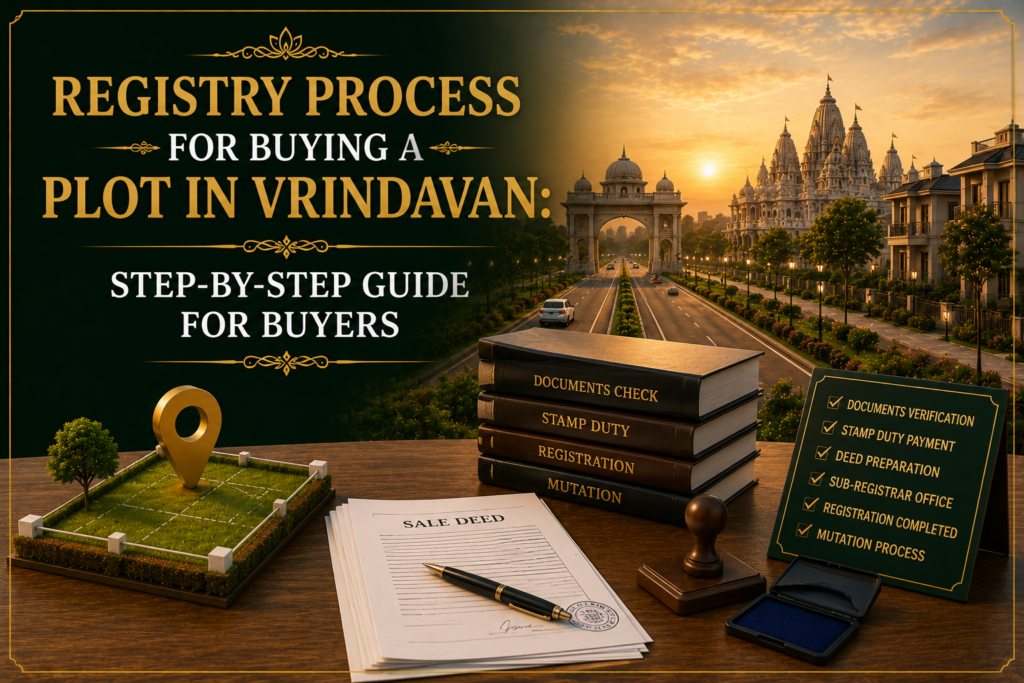
Buying a plot involves more than selecting the right location and negotiating the price. One of the most important stages of the transaction is the registry process, which formally records the transfer of ownership according to applicable laws.
Understanding the registration process can help buyers prepare the necessary documents and avoid delays.
What is Plot Registry?
Plot registry (registration) is the legal process through which the ownership transfer of a property is officially recorded with the relevant government authority.
Once registration is completed, the transaction becomes part of the official property records.
Why is Property Registration Important?
Registration helps:
- Record ownership transfer
- Create an official transaction record
- Improve transparency
- Support future property transactions
Step 1: Verify Property Documents
Before proceeding with registration, buyers should carefully review:
- Ownership records
- Sale agreement
- Identity documents
- Property-related approvals
- Tax records (where applicable)
Step 2: Confirm Transaction Details
Ensure that all important details are accurate, including:
- Buyer information
- Seller information
- Property description
- Agreed consideration amount
Step 3: Prepare Required Documents
Commonly required documents may include:
- Identity proof
- Address proof
- Property ownership documents
- Passport-size photographs
- PAN card or other applicable documents
Requirements may vary depending on local regulations.
Step 4: Payment of Applicable Charges
Registration generally involves payment of applicable government charges, duties, and fees as prescribed by the relevant authority.
Step 5: Visit the Registration Office
Both parties may be required to appear before the designated registration authority, along with the necessary documentation.
Step 6: Document Verification
Officials review the submitted documents and verify transaction details before processing registration.
Step 7: Registration Completion
Once verification and formalities are completed, the registered document is recorded according to the applicable process.
Common Mistakes Buyers Should Avoid
Not Verifying Ownership
Always confirm that the seller has the legal right to transfer the property.
Incomplete Documentation
Missing documents can delay registration.
Ignoring Professional Advice
Legal and property experts can help review important records.
Rushing the Process
Carefully verify all information before signing documents.
Tips for a Smooth Registry Process
- Keep all documents organized
- Verify details in advance
- Retain copies of all records
- Consult professionals when necessary
- Understand applicable local requirements
Conclusion
The plot registry process is a crucial part of any property transaction. Proper document verification, preparation, and compliance with applicable procedures can help buyers complete the registration process more efficiently and with greater confidence.